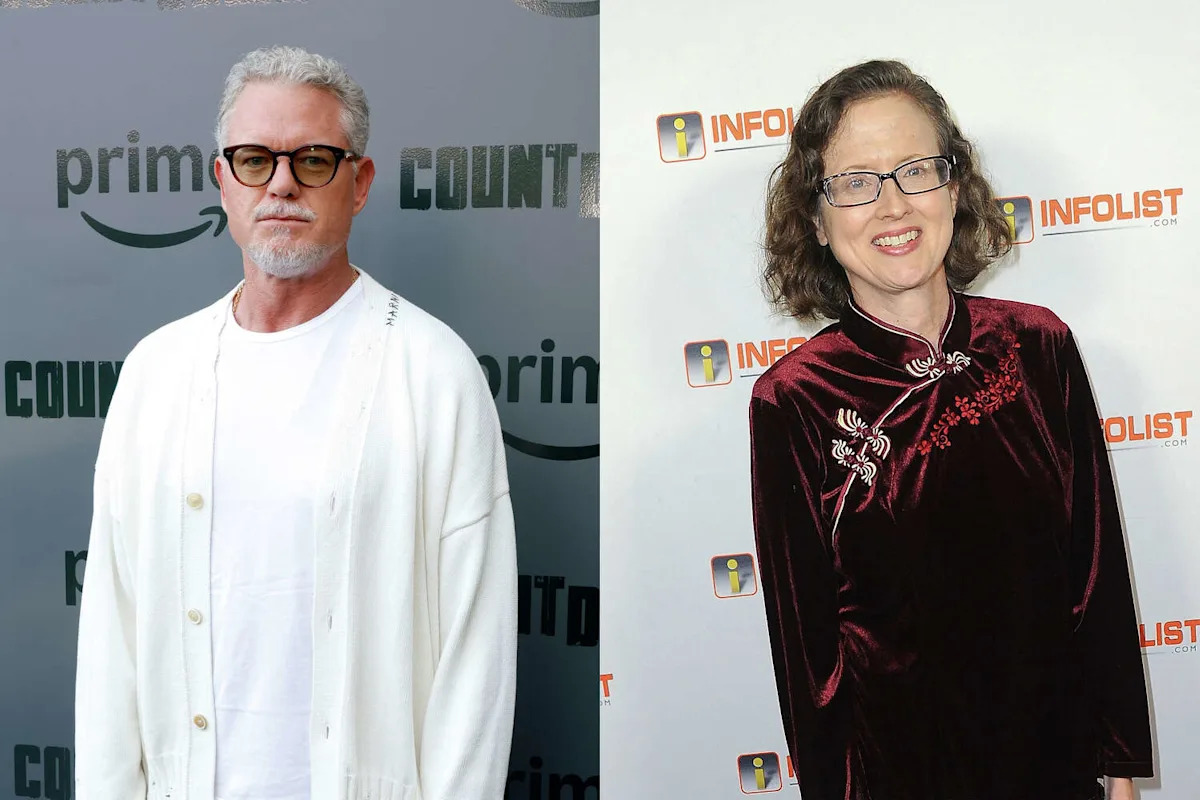
Eric Dane: Unsubstantiated "Coward" Claims and Grey's Anatomy Exit Details
Eric Dane, the actor beloved by millions for his charismatic portrayal of Dr. Mark Sloan, affectionately known as McSteamy, on ABC's long-running medical drama Grey's Anatomy, recently passed away at the age of 53 after a battle with amyotrophic lateral sclerosis (ALS). His death sparked an outpouring of tributes from former co-stars and fans alike, celebrating his talent and the indelible mark he left on television. However, amidst these heartfelt eulogies, a contrasting and deeply controversial narrative emerged from a former background actor, Laura Ann Tull, who leveled serious and unsubstantiated allegations against Dane, notably labeling him an eric dane coward.
These claims, asserting that Dane was a bully and contributed to her suffering, have ignited a fierce debate online, pitting fans defending Dane's memory against those supporting Tull's right to speak her truth. This article delves into these "coward" claims, explores the complex reasons behind Dane's departure from Grey's Anatomy, and examines the conflicting perspectives surrounding his legacy.
Unpacking the "Coward" Claims: Laura Ann Tull's Allegations
Laura Ann Tull, who stated she worked as an extra on the Grey's Anatomy set for three years, took to social media platforms, including Threads, following Dane's passing to share her grievances. Her posts quickly went viral, drawing significant attention and generating considerable controversy. Tull explicitly accused Dane of being a "coward who abused me. Bullied me. Made fun of me." She further elaborated that this alleged mistreatment occurred "When I had beaten cancer. When I was getting sick with an autoimmune disease." Tull characterized Dane as a "stuck on himself narcissist" and asserted that his death "doesn't change destruction he caused me."
Tull's claims painted a stark picture, alleging that Dane "hated" her for reading classic literature on set and engaged in gossip about her without ever having directly spoken to her. This detail is particularly striking, as it suggests a perceived animosity from a distance rather than direct confrontation. The seriousness of these accusations, especially their posthumous nature, immediately drew strong reactions from the public. Many fans rallied to Dane's defense, expressing outrage at the timing and nature of Tull's comments, frequently labeling her an "attention seeker" for seemingly disrespecting his memory. Despite the pushback, Tull has continued to engage with online comments, steadfastly defending her position and reiterating the profound impact she claims Dane's behavior had on her "health & well being." For more on the initial uproar, see "He Was a Coward": Eric Dane Bullying Claims Rock Grey's Anatomy World and Laura Ann Tull Accuses Eric Dane of Bullying: The "Coward" Allegations Unpacked.
Eric Dane's Grey's Anatomy Exit: A Complex Narrative
Beyond the personal allegations of bullying, Laura Ann Tull also made claims regarding Eric Dane's departure from Grey's Anatomy. She asserted that she was "wrongfully terminated" from the show due to illness and, more significantly, that she was the reason Dane was eventually "fired" from the series. This claim stands in contrast to publicly known information and Dane's own statements regarding his exit.
Officially, Eric Dane's character, Dr. Mark Sloan, was dramatically killed off in Season 9 in 2012, a major plot point that deeply impacted the show's narrative and characters. The Hollywood Reporter, among other industry sources, indicated that creative decisions and budget considerations, particularly the increasing cost of long-running cast members, were the primary drivers behind his departure. The character's death led to the renaming of the show's fictional hospital to Grey Sloan Memorial Hospital, ensuring McSteamy's legacy lived on within the show's universe, a testament to his impact.
During a 2024 appearance on Dax Shepard's podcast, and in subsequent interviews released after his passing, Dane himself acknowledged a period of struggle with substance abuse around the time of his exit. However, he also made it clear that this was not presented as the main reason for his dismissal from the show. It's important to distinguish between an actor's personal challenges and the production's official decisions regarding character arcs and contracts. While Tull claims Dane was "fired" due to her actions, public records and Dane's own account suggest a different, more nuanced story involving creative storytelling choices, economic factors, and his personal battles. There is no publicly available evidence to support Tull's assertion that she played a role in Dane's departure, making her claims in this regard largely unsubstantiated.
Interestingly, Dane did make a brief, albeit significant, return to the series in Season 17 during a vivid beach hallucination experienced by Meredith Grey while battling COVID-19, proving the enduring popularity and significance of his character.
Conflicting Narratives: Co-star Tributes vs. Accusations
The dichotomy between Laura Ann Tull's severe accusations and the heartfelt tributes from Eric Dane's former Grey's Anatomy co-stars highlights a complex challenge in assessing public figures and their legacies. Kate Walsh, who played Dr. Addison Montgomery and Dane's on-screen love interest, fondly remembered him for his "sensitivity and vulnerability, (and intelligence, of course)." Her words echo sentiments shared by several other cast members, who generally spoke of Dane with warmth and respect.
This stark contrast raises questions about the nature of on-set interactions and the varying perceptions of individuals within a hierarchical production environment. An extra's experience can differ significantly from that of a lead actor, and perceptions of behavior can be subjective. While lead actors often interact closely with each other, their interactions with background actors might be limited, if not entirely absent, as Tull herself claimed she "never spoke to Dane once directly" but believed she "did hear him talk about me." This makes it incredibly difficult to independently verify her claims of bullying and abuse years later.
The situation underscores the difficulty in forming a complete picture of an individual, particularly after their passing, when only one side of a conflict can speak. It also reflects the broader societal conversation about workplace dynamics, accountability, and the power of individual testimonies in the age of social media. Without direct evidence or corroborating accounts, Tull's claims, while deeply felt by her, remain unsubstantiated allegations against a figure who is no longer able to respond.
The Nuance of Celebrity Legacies and Posthumous Accusations
The case of Eric Dane and Laura Ann Tull's "coward" claims brings to the forefront the ethical complexities surrounding posthumous accusations and the shaping of a celebrity's legacy. When serious allegations are made against someone who has passed away, they are deprived of the opportunity to defend themselves, offer clarification, or seek reconciliation. This creates a difficult situation for the public, who are left to weigh unverified claims against established public personas and testimonials from those who knew the individual well.
It's crucial for consumers of information to approach such narratives with a critical eye, recognizing the emotional weight of personal accounts while also considering the lack of corroborating evidence. The power dynamics on a busy film set can be intricate, and perceptions can vary widely. While it's vital to allow individuals to share their experiences, it's equally important to distinguish between personal grievances and substantiated facts, especially when a person's entire legacy is at stake.
In the absence of concrete proof, the narrative surrounding Eric Dane's character, both on and off-screen, remains multifaceted. His professional struggles with substance abuse, which he openly acknowledged, add another layer of complexity, hinting at personal battles that may or may not have influenced his professional conduct. Understanding these nuances helps us navigate the challenging terrain of posthumous public discourse without rushing to judgment based on unverified allegations.
Conclusion: Eric Dane's portrayal of Dr. Mark Sloan on Grey's Anatomy cemented his place in television history, creating a character whose charm and evolution resonated deeply with viewers. His recent passing brought renewed focus to his life and career, but also, controversially, resurfaced unsubstantiated allegations from former extra Laura Ann Tull, who labeled him an "eric dane coward" and a bully. While Tull's claims detail a distressing personal experience, they stand in stark contrast to the tributes from his co-stars and lack independent corroboration. Similarly, her assertions regarding his Grey's Anatomy exit are not supported by official accounts, which point to creative decisions, budgetary factors, and Dane's own acknowledged battles with substance abuse as the reasons for his character's departure. The differing narratives underscore the challenges of assessing an individual's legacy, particularly when serious, unverified claims emerge after their death, urging the public to consider all available information with thoughtful discretion.